Battery

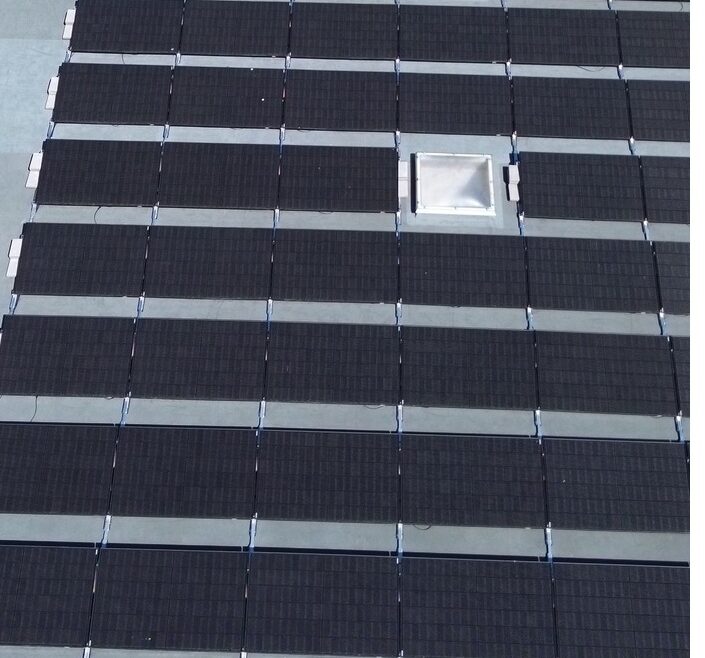
Is it worth getting Solar Panels in the UK?

Is it worth getting Solar Panels in the UK? 705 1024 Elektra Smart Energy
Is It Worth Getting Solar Panels in the UK?

With energy prices continuing to rise and sustainability high on the national agenda, more and more UK homeowners are looking to solar power as a solution. But the question remains: is it worth installing solar panels in the UK, where the sun doesn’t always shine?


Do Solar Panels Work in the UK?

One of the most common myths is that solar panels don’t work well in the UK because of our grey skies. While it’s true we don’t get as much sun as southern Europe, solar panels don’t need constant sunshine—they generate electricity from daylight, not heat.

In fact, many parts of the UK receive over 1,000 hours of sunshine per year. Even on cloudy days, solar panels still produce energy, just at a lower rate.

Modern solar technology allows panels to generate electricity even on overcast days, making them a viable energy solution year-round. In fact, solar panels often perform best in cooler temperatures. Their ideal operating temperature is around 25°C, which happens to be the average of a nice UK summer day—making our mild climate surprisingly well-suited for solar energy.


How much can you save? 

Depending on your location and usage habits, installing solar panels can save a typical UK household £500–£1500 a year on electricity bills. If you add a battery system and shift more of your usage to daylight hours, your savings could be even greater.

Savings can be even higher if you:

Take advantage of low night-time electricity tariff

Use most of your electricity during the day (in case you don’t have battery)

Have a battery storage system

Take advantage of the Smart Export Guarantee (SEG) by selling unused energy back to the grid.

Take advantage of low night-time electricity tariff

What does it cost to go Solar?

At Elektra Smart Energy Ltd, we offer tailored solar PV systems using high-performance Jinko all-black panels and Fox inverters and batteries. Here are a few of our most popular packages:

We offer a wide range of high-quality solar PV systems tailored to suit your energy needs, property type, and budget. Whether you’re after a compact system for a small home or a full hybrid setup with battery storage, we’ve got you covered.

We can install systems from trusted brands including Fox, Tesla, SolarEdge, GivEnergy, SigEnergy, and many more. Every system is custom-designed to match your energy usage, roof space, and long-term goals—whether that’s maximising savings, boosting energy independence, or reducing your carbon footprint.

Here are a few examples of our popular cost-effective system packages:

  1. Solar PV with 8 Panels & 3kW Inverter – £3,750
  • Fox 3.0kW String Inverter
  • 8x Jinko 440W All-Black Panels
  • A cost-effective entry point for small to medium homes
  1. Solar PV with 10 Panels, 3.7kW Inverter & 5.18kWh Battery – £6,750
  • Fox 3.7kW Hybrid Inverter
  • 10x Jinko 440W All-Black Panels
  • Fox EP5 5.18kWh Battery
  • Ideal for households that want to store and use more of their solar energy

3.Solar PV with 14 Panels, 5kW Inverter & 10.36kWh Battery – £8,450

  • Fox 5kW Hybrid Inverter
  • 14x Jinko 440W All-Black Panels
  • Fox EP11 10.36kWh Battery
  • Great for larger homes or those looking for maximum savings and energy independence

We understand that every home and customer is different. That’s why we don’t offer “one-size-fits-all” solutions. Our experts will work with you to design and install a system that’s tailored to your specific needs—ensuring you get the most efficient, cost-effective setup possible.

These systems are designed not only to save you money but to deliver high performance, long-term reliability, and sleek aesthetics.


Environmental Benefits

Installing solar panels isn’t just about cutting bills—it’s also about cutting carbon. A typical solar PV system can reduce your home’s carbon emissions by 1.5 to 2 tonnes of CO₂ per year, making a real impact on the environment.


Incentives and Financial Support

While the Feed-in Tariff has ended, homeowners can still benefit from:

  • The Smart Export Guarantee (SEG) – Get paid for excess electricity you export
  • Zero VAT on Solar – Domestic solar installations are currently VAT-exempt, reducing upfront costs

Is Your Home Solar-Ready?

Before you install, it’s worth considering:

  • Roof orientation and angle – South-facing roofs are ideal, but east/west can still be very effective
  • Shading – Avoiding shade from trees or chimneys improves performance. However, Solar PV system can still be installed in partly shaded area with the right consideration. 

At Elektra Smart Energy Ltd, we offer free consultations to help you assess whether solar is right for your property and energy usage.


The Verdict: Is It Worth It?

For most UK homeowners, yes—solar panels are worth it. While the initial cost is not small, the long-term savings on electricity, potential income from excess energy, and environmental benefits make solar panels a smart investment.

And with energy prices unlikely to fall dramatically any time soon, generating your own electricity offers more control and peace of mind


Ready to Go Solar?

Contact Elektra Smart Energy Ltd today to book your free home survey or speak to one of our energy experts. We’ll walk you through your options and design a custom solar system that works for your home, lifestyle, and budget.


Elektra Smart Energy

9/07/2025


Case Study: Navigating the clash between Britmet Roofing and MCS Requirements

Case Study: Navigating the clash between Britmet Roofing and MCS Requirements 768 1024 Elektra Smart Energy


Project Overview

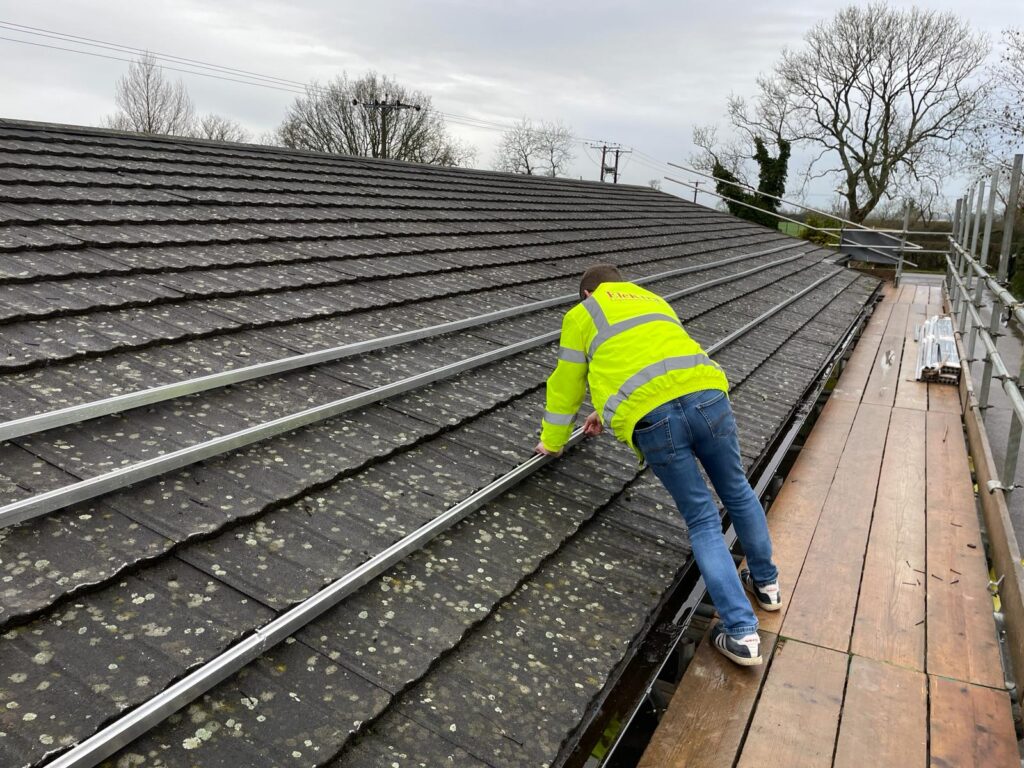
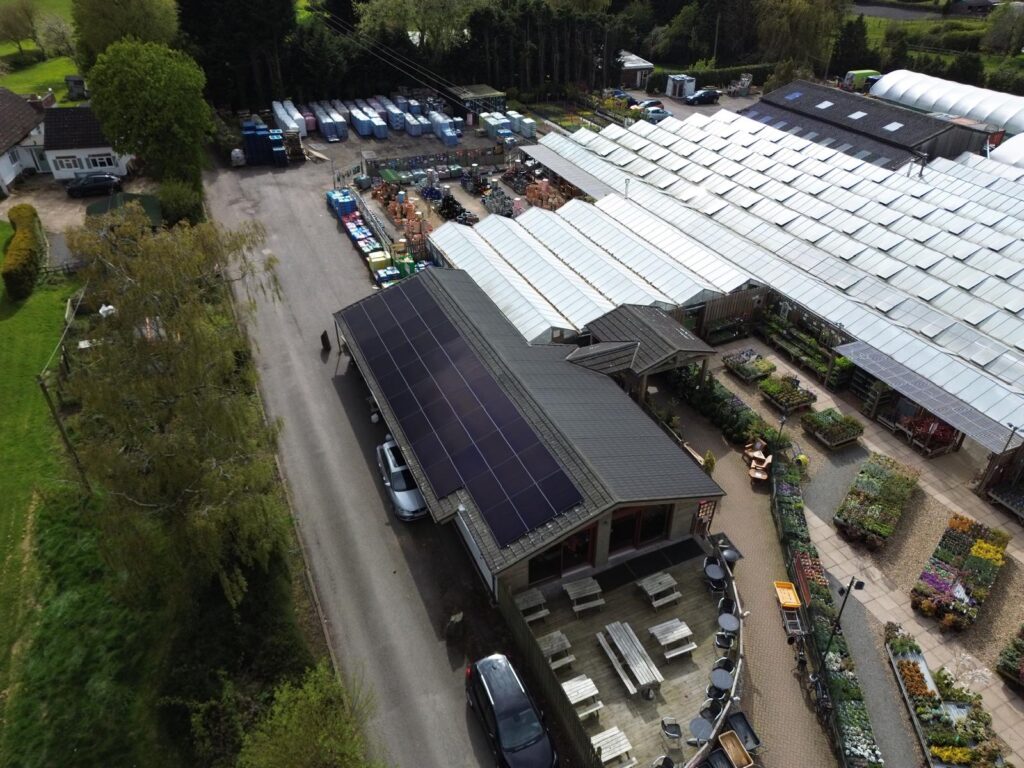
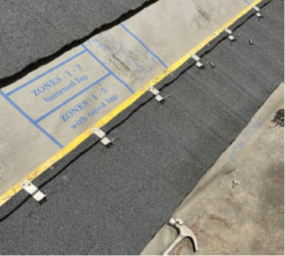
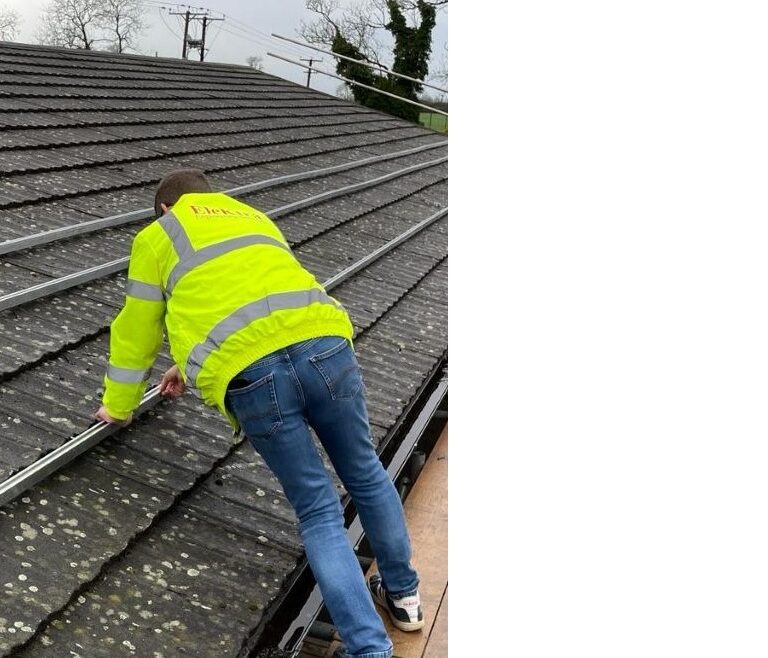
A recent solar PV installation on a small commercial building presented our team with a unique and complex challenge. The objective was to install 42 solar panels on a roof covered with Britmet Ultratile, a lesser-known lightweight metal tile roofing system. While the technical installation itself was straightforward, the project soon became entangled in a regulatory dilemma involving manufacturer warranties and MCS (Microgeneration Certification Scheme) compliance.

Site Survey and Challenge

During the initial site survey, we identified the roofing material as Britmet Ultratile—an unusual choice for commercial properties and one that limited the compatibility of standard solar mounting systems. Our priority was to ensure that the solar installation did not void the manufacturer’s warranty on the roof.

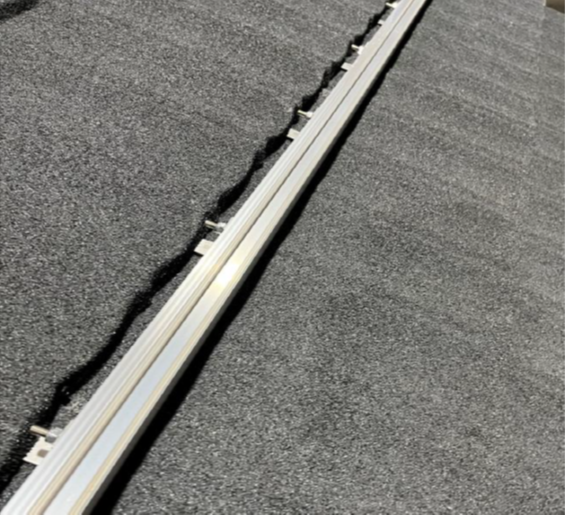
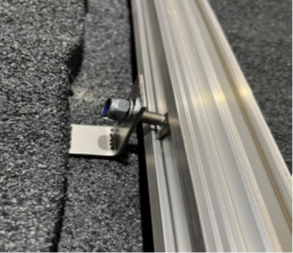
We reached out directly to Britmet to discuss mounting options that would preserve the warranty. Britmet recommended specific roof hooks manufactured by Renusol, a well-respected name in the solar industry. However, the particular Renusol hooks approved by Britmet for use with their Ultratile system had not yet received MCS certification.

This created a significant dilemma:

  • Using the recommended Renusol hooks would preserve the roof warranty but result in the installation not being eligible for an MCS certificate.
  • Using an MCS-certified mounting system not approved by Britmet could void the client’s roof warranty—an unacceptable risk for both the client and us.


Client Engagement and Decision

We presented the situation to the client with full transparency. After reviewing the pros and cons, the client made an informed decision to proceed with Britmet’s recommended hooks, prioritising the preservation of the roof warranty over obtaining an MCS certificate.


Elektra Smart Energy


Why are Energy Prices so High?

Why are Energy Prices so High? 560 747 Elektra Smart Energy
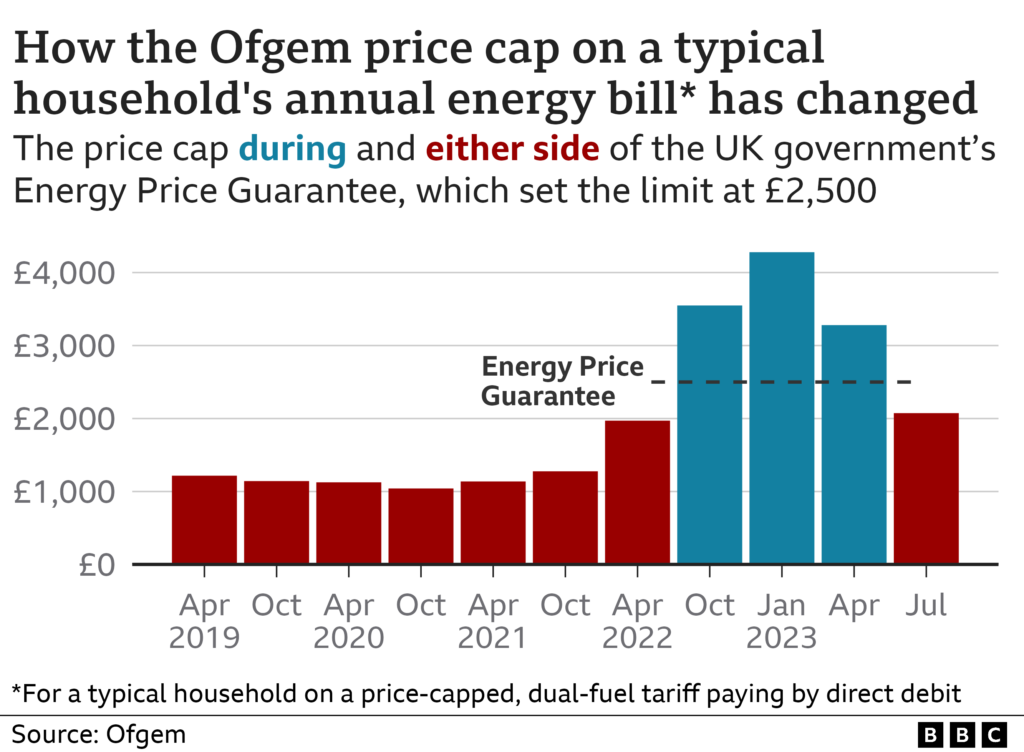
The energy price cap is determined by the energy industry regulator, Ofgem and the cap sets a maximum price that energy suppliers can charge customers for each kilowatt hour (kWh) of energy that they use.  

After a 54% increase to the energy price cap in April 2022, the Energy Price Guarantee (EPG) was enforced .

This was a great reduction from the energy price cap level of £3,280 set by Ofgem.  


What caused the Energy Crisis? 

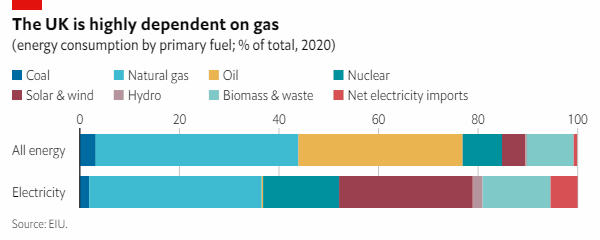
Our energy bills have been increasing due to supply and demand issues pushing up wholesale energy prices. This is the amount that your provider pays to the energy generators for gas and electricity. It is the rise in these wholesale costs that are the main driver in the energy price spikes. So, what has caused the wholesale prices to rise?  

Peruvian imports have also more than doubled.

Sellindge. This is the European link combining the technical expertise of both the British National Grid and the French RTE. The site is still not running at full capacity, and is aiming to reach this goal by October 2023.  

Why are Energy Bills still so high? 

Our bills are dependent on the wholesale prices of energy, which are now decreasing. Network cost, which makes up 25.35% of our energy bills, pays for fitting and running gas pipes and electricity cables. It also covers the cost of energy firms that have failed. Our energy bills are therefore entirely dependent on the price of imports. As a result, most companies “hedge”.

Will Energy Bills stay down? 

Market analysts do predict that energy prices will continue to decrease from 2023 into 2024. This may spark competition within the industry, pushing prices down further. 


Sophie Ben-Tovim

8/08/2023


Case Study – Improper Integration of Single-Phase Battery Inverter in a Three-Phase Domestic System

Case Study – Improper Integration of Single-Phase Battery Inverter in a Three-Phase Domestic System 1200 1600 Elektra Smart Energy
 

Case StudyImproper Integration of Single-Phase Battery Inverter in a Three-Phase Domestic System

Client: Domestic Homeowner

Overview

In the evolving domestic renewable energy market, an increasing number of households are investing in solar PV systems and battery storage to reduce reliance on the grid. However, a concerning trend has emerged: the improper installation of single-phase inverters in three-phase systems. This case study highlights a real-world example where a lack of understanding by the installer led to suboptimal system performance and wasted investment.


Client Background and Initial System

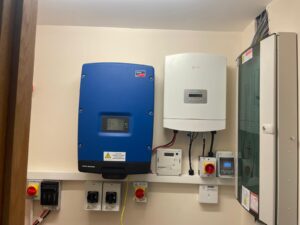
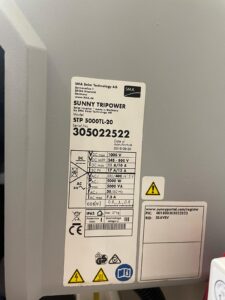
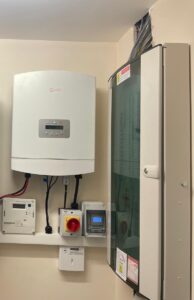
The client, a homeowner with a three-phase electrical system, originally had a 5kW SMA Sunny Tripower string inverter installed—an appropriate choice for a three-phase supply. The system performed as expected, efficiently converting solar energy across all three phases of the property.


Battery System Installation-The Error

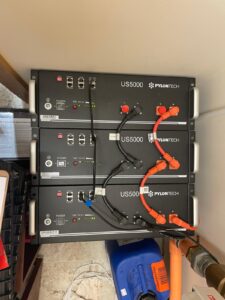
Later, the client sought to enhance the system by adding battery storage to capture excess solar energy for use during non-sunlight hours. Unfortunately, the installer added a single-phase Solis AC-coupled inverter paired with 3x Pylontech US5000 batteries, providing a total of 14.4kWh storage (13.68kWh usable).

Critical Issues Identified:

1. Single-Phase Inverter on a Three-Phase System

  • The AC-coupled inverter was connected to only one of the three phases, effectively backing up just one-third of the house’s electrical circuits.
  • As a result, two-thirds of the household loads were left unpowered by the battery system, rendering the installation inefficient and not fit for purpose.


2. Visible Installation Flaws:

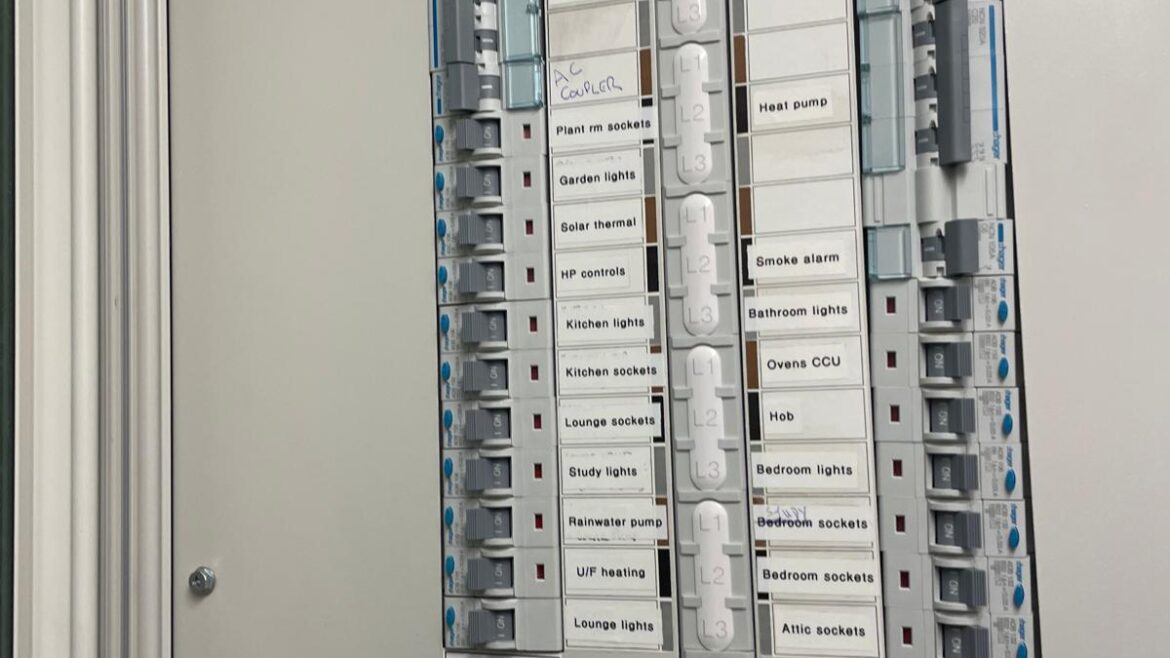
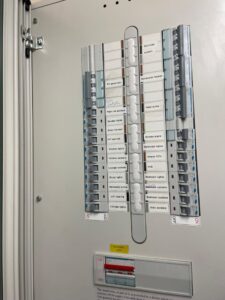
    • The consumer unit clearly shows a single-phase MCB labeled “AC coupler” installed adjacent to the three-phase MCB for the PV inverter.
    • This basic oversight highlights a fundamental misunderstanding of electrical phase balancing and system integration.

3. Orientation of Pylontech Batteries:

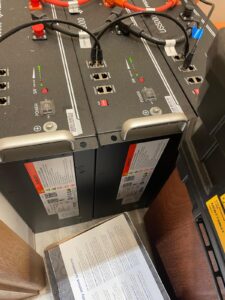
    • The batteries were installed facing upward, contrary to Pylontech’s official guidelines, which mandate vertical mounting with terminals facing forward.
    • This poses serious issues:
      • Reduced heat dissipation
      • Increased internal stress
      • Potential warranty voidance


Manufacturer Installation Requirements: Pylontech US5000

  • Correct Orientation:
    • Stand vertically on base
    • Terminals facing forward
  • Why This Matters:
    • Heat Management: Vertical placement enables proper airflow.
    • Structural Integrity: Maintains correct internal cell alignment.
    • Warranty Compliance: Non-compliance risks voiding manufacturer support.
Consequences and Resolution Challenges

Upon inspection, Elektra Smart Energy identified the issues and offered a solution:

  • Replace both the battery and inverter with components designed for a three-phase system.
  • Unfortunately, the Pylontech US5000 batteries are not compatible with three-phase inverters, making an inverter-only upgrade impractical.
  • The client opted not to proceed with a full system replacement due to cost, leaving them with a partially effective solution that fails to meet the energy needs of the entire property.

Key Takeaways

  • Lack of installer expertise can lead to poor system performance, safety concerns, and wasted investment.
  • Homeowners often rely on professionals for technical advice—they should not be expected to understand phase systems.
  • It is the installer’s responsibility to ensure compatibility, proper design, and safe implementation.

Elektra Smart Energy: The Right Choice

At Elektra Smart Energy, we are qualified electrical engineers with a strong foundation in three-phase systems, battery integration, and renewable energy technology. We design systems tailored to your property, rather than forcing one-size-fits-all solutions.

Whether you’re planning a new solar installation or looking to retrofit battery storage, we ensure compatibility, safety, and maximum efficiency—no compromises.

Don’t pay the price for someone else’s learning curve. Choose competence. Choose Elektra Smart Energy.


Case Study – Reviving a dormant GivEnergy battery Installation

Case Study – Reviving a dormant GivEnergy battery Installation 768 1024 Elektra Smart Energy
 
Case Study- Reviving a Dormant GivEnergy Battery Installation

Client: Domestic Homeowner
Location: Whichford
System Type: GivEnergy Hybrid Inverter & Battery Storage
Installation Date: June 2023
Issue Reported: Battery not charging or discharging

Background

In June 2023, a GivEnergy hybrid inverter and battery storage system was installed by a company that has since ceased trading. Just one month later, in mid-July 2023, the homeowner began experiencing issues — the battery ceased to function, unable to charge or discharge. Over the course of the following year, the client made numerous unsuccessful attempts to resolve the issue through both the original installer and other third-party contractors.


Our Involvement

The client contacted us on a Friday in [June 2024]. Given the nature of the problem and the original installer no longer being in business, our first step was to transfer the monitoring account associated with the system to our online portal. This enabled remote access to the system for diagnostic purposes.

After reviewing the available data, we scheduled a site visit for the following Wednesday.

Diagnosis & Repair

On-site inspection confirmed our suspicion: the battery had entered a deep sleep state due to prolonged inactivity, with the voltage dropping below its operational threshold. This is a common issue when a battery is left unpowered and unmonitored for extended periods.

To recover the battery:

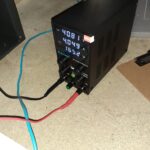
  • We used an external DC power supply to “wake up” the battery.
  • The recovery process took approximately three hours.
  • All firmware was updated.
  • A full battery calibration was performed later that evening, with the support of GivEnergy’s technical team.

Ongoing Monitoring & Follow-Up

We closely monitored the system over the following days to ensure stable operation and proper charging/discharging cycles. The system has remained operational and efficient since the repair.

Additional Issues Identified

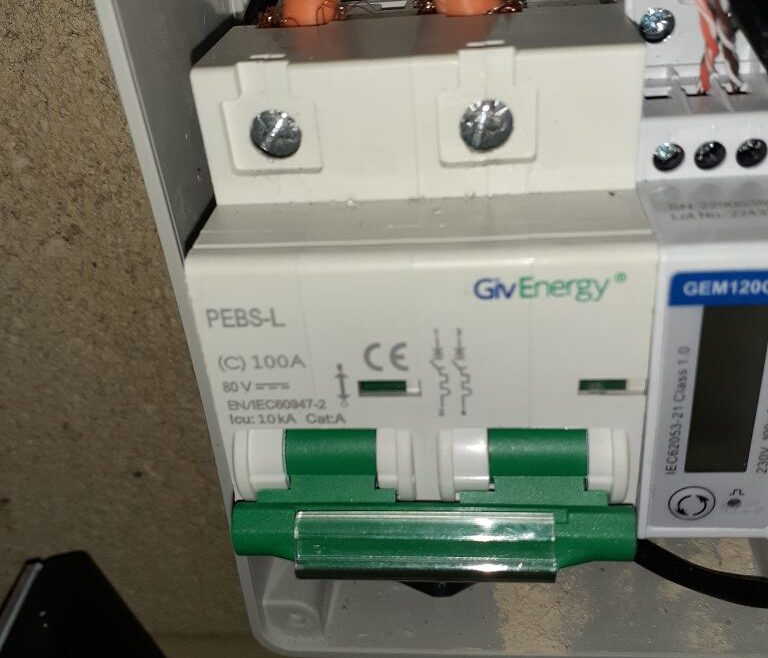
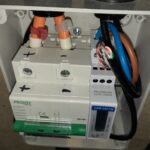
During the site visit, we identified several installation shortcomings that did not comply with GivEnergy or MCS standards. The most critical issue was with the DC miniature circuit breaker (MCB) between the inverter and battery. Poor cable termination had caused intermittent tripping, ultimately leading to the battery being isolated and discharging completely.

To rectify:

  • We replaced all battery cabling.
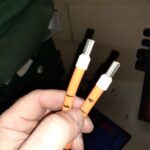
  • Installed ferrules in accordance with GivEnergy’s wiring standards.
  • Properly torqued all terminals to 3.5Nm as per manufacturer specifications.

 
Client Impact & Ongoing Support 

Unfortunately, due to the lack of MCS certification and DNO notification from the original installer, the client was unable to set up a Smart Export Guarantee (SEG) with their energy supplier. As a result, over 1.5MWh of surplus energy was exported to the grid without any financial return.

We are now assisting the client in retrospectively obtaining the necessary documentation to allow SEG registration, ensuring they can fully benefit from their system moving forward.

Conclusion

Thanks to our intervention, the client’s GivEnergy system is now fully operational, safe, and compliant with industry standards. Although the client lost out on significant energy.

Case Study – Beware of Cowboy Installers

Case Study – Beware of Cowboy Installers 768 1024 Elektra Smart Energy
 
Why it’s important to beware of Cowboy Installers – A real life example from Warwick.

Client Name: Mr James N.
Location: Warwick
Date of Quote: March 2025

Proposed System:

  • 7 x 455W Aiko ‘All Black’ Solar Panels
  • Fox ESS 5kW Hybrid Inverter
  • 10.36kWh Battery Storage
  • BirdBlocker System (included as goodwill)
  • Turnkey Price: £7,513 (inclusive of all professional services and certification)
Overview
In March 2025, we provided a comprehensive and competitive quote to Mr James N. in Warwick for a high-quality Solar PV system. Our offer included not only premium components but also a professional, certified installation process:
  • Professionally erected scaffolding by certified scaffolders
  • Solar panels installed by qualified roofers
  • System wired and commissioned by a fully qualified NICEIC electrician
  • Full compliance with MCS standards and NICEIC certification
  • G99 application (if required), fully insured workmanship warranty, and turnkey project management.


What happened?
Mr James responded very positively to our proposal. However, a few days later, we received the following message:

“Hi both,
Apols I didn’t get back to you.
I agreed to a deal on Monday with a company in Yorkshire who installed the next day and price matched you. To be honest, I got a bit caught up in the moment.
Service wise you came across really well and your price was competitive.
The company I used cut costs by not using scaffolding. I’m now dealing with that as they’ve not done a great job aligning the panels.
Hopefully the info is useful.”

Red Flags in this Scenario:

1. Next-Day Installation:
A next-day install may sound convenient, but it raises concerns. Quality solar installations require planning, permissions (such as the G99 application where applicable), and scheduling of specialist teams. An immediate turnaround suggests corners were likely cut.
2.Lack of Scaffolding:
Professional installers use scaffolding to ensure the safety of both installers and homeowners and to protect the property during installation. Skipping this step puts both the installation and safety at risk — and often voids insurance cover.3.No G99 Application:
Based on the speed of installation, it is almost certain that the installer did not file the necessary G99 application, which is legally required for systems with inverters above 3.68kW. This process typically takes up to two weeks for DNO approval. The alternative would have been to downsize the inverter to 3.68kW to fall under G98, compromising system performance — especially with a 10.36kWh battery.

 
The Consequences:

While the client may have paid the same price, the shortcuts taken likely resulted in:

  • Suboptimal panel alignment
  • Compromised safety
  • Reduced inverter capacity (likely 3.68kW instead of 5kW)
  • Lower battery performance due to inverter bottleneck
  • No BirdBlocker system included
  • No professional scaffolding
  • Risk of non-compliance with MCS and NICEIC standards

A 3.68kW inverter may appear to be “enough,” but when paired with a 10.36kWh battery, it limits the system’s ability to charge and discharge efficiently, particularly during peak household energy usage. This reduces the long-term benefit and ROI of the system. The cost difference between a 3.68kW and a 5kW inverter is marginal, and in our view, well worth the investment.

Conclusion: You get what you paid for
This case highlights the risks of rushing into a solar installation with companies that offer speed over quality. While Mr James matched our quoted price, the value he received was significantly lower.

At Elektra Smart Energy we pride ourselves on delivering high-quality, safe, and future-ready solar solutions — with no compromise on compliance, safety, or workmanship. A well-designed system is an investment for decades, and cutting corners to save a few days or a few pounds can lead to long-term regret.

If you’re considering solar — take your time, ask questions, and choose a company that does it right the first time.

Energy Company Obligation (ECO4) Scheme

Energy Company Obligation (ECO4) Scheme 560 747 Elektra Smart Energy


Energy Company Obligation (ECO4)Scheme  

Energy Company Obligation ECO4 Scheme is the latest phase of the ongoing government scheme to support low-income households by funding energy-efficient upgrades to homes, reducing carbon emissions, as well as electricity and energy bills. It requires that large energy companies (such as EDF, British Gas, Scottish Power etc.) pay to have energy-saving measures installed in people’s homes. ECO4 provides the opportunity to install solar photovoltaics (PV) in all electrically heated homes, as long as a biomass machine or District Heat Network has been ruled out. This government initiative aims to not only make homes warmer and household emissions lower but to make medium and larger energy companies more accountable for supporting low-income households.

Who is eligible for the Energy Company Obligation ECO4 Scheme?

  • Homeowners, Landlords and Private tenants
  • People receiving income-related benefits
  • Properties with inefficient electric heating, within the D-G energy efficiency band.

Qualifying benefits for the Energy Company Obligation ECO4 Scheme include:

  • Jobseekers Allowance (JSA) Income based
  • Employment and Support Allowance (ESA), income related
  • Housing Benefit
  • Pension Credit
  • Income Support (IS)
  • Universal Credit (UC)
  • Work Tax Credit (WTC)
  • Warm House Discount Scheme Rebate
  • Child Tax Credits
  • Child Benefit, depending on income threshold

Here is the logo for the Energy Company Obligation ECO4 Scheme


Click on the link to find out more about the Energy Company Obligation ECO4 Scheme: Energy Company Obligation (ECO) | Stratford-on-Avon District Council

The LA Flex Scheme

If you are not receiving any benefits, you may still qualify for funding through the LA Flex Scheme. This is an extension of ECO4, created to tackle fuel poverty, which allows you to qualify for free funding that covers the costs of energy-saving measures, such as solar panels. Flex gives councils and local authorities the power to set the eligibility criteria in their area for the ECO4 scheme, meaning that more residents, on top of those receiving benefits, can qualify for funding.

Who is eligible for the scheme?

Although the criteria can vary between councils, LA Flex is generally targeted at two groups of people who are on low incomes:

  1. Those that are in fuel poverty (households spending at least 10% of their net income on heating their home.)
  2. Those who are more vulnerable and at risk during cold weather including:
  • People with cardiovascular conditions
  • People with respiratory conditions
  • People with disabilities
  • People with mental health conditions or learning disabilities that lowers the individual’s ability to look after themselves (including those with dementia)
  • Older people (age 65 and over)
  • Households with young children (0-5)
  • Pregnant women

 Click on the link to find out more: Energy Company Obligation (ECO) | Stratford-on-Avon District Council

Click on the link to find out more: Energy Company Obligation (ECO): Help to Heat scheme – flexible eligibility – GOV.UK (www.gov.uk)

The Green Deal Scheme

The Green Deal helps you make energy-saving improvements to your home through a loan which you’ll have to pay back. Any household with an electricity meter (including prepayment meters) can use the scheme, as long as both the landlord and the tenant agree to the improvements if the building is rented. You must get your property assessed by a qualified Green Deal assessor to use the Green Deal, who will visit your home and talk to you about your property and your energy use to help decide if you could benefit from Green Deal improvements, such as solar photovoltaic (PV) panels. You will then receive a Green Deal advice report which is valid for 10 years, or until you make changes or energy saving improvements to the property, for example you build an extension or change the windows.

A finance plan can then be offered to you by a Green Deal provider for improvements recommended in your Green Deal assessment, which will be based on what you’ll be expected to save on your energy bills. The annual repayments on the loan should therefore not be more than the savings you might make on your energy bills.

The loan differs to a usual loan, as it will be paid back through a charge added to your electricity bill. This is because the Green Deal stays with the property. If you decide to move, you no longer benefit from the improvements and therefore you stop paying for them.

Click on the link to find out more: Green Deal: energy saving for your home: Overview – GOV.UK (www.gov.uk)

The Green Deal Logo


The Smart Export Guarantee (SEG) Scheme

Instead of offering solar panel grants directly; the SEG scheme delivers a solution to reimburse your investment. The scheme requires energy suppliers with over 150,000 customers to pay homeowners for unused solar-generated electricity, feeding any unused electricity from your solar photovoltaic (PV) panels into the National Grid. Under SEG, you get paid for every unit of electricity that you give back to the grid.

Who is eligible for the scheme ?

  • You must install a renewable electricity-generating system (such as solar panels)
  • You will need a smart reader, since you’ll need to provide half-hourly export readings
  • Your installation and installer should be certified through the Microgeneration Certification Scheme (MCS)

The Smart Export Logo

Click on the link to find out more : Smart Export Guarantee (SEG): earn money for exporting the renewable electricity you have generated – GOV.UK (www.gov.uk)

Pay 0% VAT “Energy-Saving Products” until March 2027

Rishi Sunak’s spring statement 2022, announced VAT on ‘energy-saving products’ to be set at 0%, a significant reduction from the previous rate of 5% and the typical charge of 20%. Eligible parties will be reliant on installers and suppliers to qualify for this reduction; the products cannot be bought or installed DIY.

If the cost of the products (not including VAT) is 60% or less of the total cost of the installation (not including VAT), you’ll pay 5% on everything. If the products cost more than 60% of the total cost of installation, homeowners will pay 5% VAT on the labour and the standard rate of 20% for the products. 

0% VAT on Energy Storage Systems, including solar batteries. A significant step by the government to support the adoption of renewable energy technologies and enhance energy efficiency. By eliminating VAT, the government aims to make energy storage solutions more affordable for households and businesses.

Energy Storing

With the 0% VAT rate, upfront cost for installing the systems is significantly reduced. More financially accessible for individuals and organizations to invest in sustainable energy solutions.

This initiative aligns with the UK’s broader goals of reducing carbon emissions and achieving net-zero targets. By promoting the use of energy storage, the policy helps in stabilizing the grid, reducing reliance on fossil fuels, and enhancing energy security. This will stimulate economic growth by creating jobs in the renewable energy sector and driving innovation in energy storage technologies.

Overall, the introduction of 0% VAT on energy storage systems in February 2024 marks a pivotal move towards a greener and more sustainable energy future for the UK.

Click on the link to find out more about us: About – EleKtra Smart Energy

Click on our homepage: Home – EleKtra Smart Energy – Solar energy in Stratford upon Avon

Case Study – Impressive SolarEdge Solar PV System and EV charger

Case Study – Impressive SolarEdge Solar PV System and EV charger 560 747 Elektra Smart Energy
 
Impressive SolarEdge Solar PV System and EV charger

I would like to share with you our experience on one of our projects that was a Particularly impressive outcome.  We installed a SolarEdge system complied with ‘all black’ panels and bird protection.

Initially the client requested we install 32x N-Type ‘All Black’  435W Jinko Solar panels,  just under 14kW Solar PV system. After a G99 application we received export limitation from the DNO so we  agreed with the client to reduce the system to 9.1kW.

We installed 21 N-Type ‘All Black’ 435W Jinko Solar panels. These panels look smart and include the latest N-type technology and come with a 25-year product warranty and 30-year performance warranty.

The Solar Panels we Installed
What is N-Type technology?

N-type ( “negative-type”) solar PV panels have several advantages over other types of solar panels, such as P-type (P-type meaning “positive-type”). Here are some of the advantages of N-type solar panels:

Higher Efficiency: N-type solar panels typically have higher efficiency compared to P-type panels. Higher efficiency means that they can convert a greater percentage of sunlight into electricity, leading to a better overall performance.

Lower Degradation Rates: N-type solar cells often exhibit lower degradation rates over time. The efficiency of N-type panels tends to degrade slowly compared to other types, so a longer lifespan and more stable performance over the years.

Better Performance in High Temperatures: N-type solar panels generally perform better in high-temperature conditions. They are less sensitive to temperature-related efficiency losses, which is an important factor in regions with hot climates.

Lower Light-Induced Degradation (LID): N-type solar cells are less prone to a phenomenon known as Light-Induced Degradation . Can lead to a temporary decrease in efficiency of solar panels when exposed to sunlight for the first time. N-type cells experience less LID compared to P-type cells.

Higher Voltage Output: N-type solar cells typically have a higher voltage output, which can be advantageous in certain system configurations. Higher voltage can reduce the overall system losses and improve the overall performance of the solar power system.

Lower Sensitivity to Impurities: This reduced sensitivity can contribute to better overall stability and reliability of N-type solar panels.

Important to note that choice between N-type and P-type solar panels depends on various factors, cost, availability, specific application requirements. Advances in technology and manufacturing processes may continue to influence the relative advantages of different types of solar panels.

As part of the SolarEdge System we installed optimisers- one optimiser to each Solar PV panel

Diagram of an Optimiser

What is an Optimiser and why do we need it?

A SolarEdge optimiser is a device used in photovoltaic (PV) solar power systems to maximize energy harvesting from solar panels.

They perform several functions:

Maximum Power Point Tracking (MPPT): Optimisers enable each panel to operate at its optimal voltage and current (maximum power point)

Shade Tolerance: SolarEdge optimisers allow unaffected panels to continue operating at peak efficiency

Monitoring and Safety: SolarEdge optimisers provide real-time monitoring.

Design Flexibility: SolarEdge design flexibility allows the installation of panels with different orientations, tilts, or different types on the same string

In summary:

SolarEdge optimisers enhance overall performance, efficiency, safety of solar power systems by optimising the output of each individual solar panel. Not every solar installation requires optimisers, they are particularly beneficial where shading, panel mismatch, or variable environmental conditions are prevalent

We installed a SolarEdge 10kWh single phase inverter for any future expansion with 20kWh batteries. It gave the client the following benefits:

    • During sunny days the client is able to store up to 20kWh of electricity in the battery  to be used at night when the Solar PV doesn’t generate electricity with no or very minimal use of electricity from the grid.

    • During cloudy days where the Solar PV doesn’t provide enough electricity required, the battery can be charged during the night-time at night’s tariff, which is 25% of the cost of day’s tariff to be used in the daytime.  This is called Energy arbitrage – meaning storing energy for use during pick hours guarantees much cheaper electricity prices throughout the day.


    For more info about optimisers: Click here

    We also installed a bird blocker

    A “solar PV bird blocker” refers to a device or system designed to prevent birds from nesting or perching on solar photovoltaic (PV) installations. Birds can sometimes pose issues for solar panels by leaving droppings that reduce efficiency, scratching or pecking at the panels,  nesting in the areas around the panels  and increases risk of fire. 

    Whilst there are several solutions and systems offered in the market to block birds from going under the solar panels, we believe placing a screen around the solar array is the more efficient solution.

    In this project we used a ‘BirdBlocker’ system, which offers 99% certainty that bird will not go under your array and made of 100% recyclable material. This system also come with 10 year warranty.  

    For more information on BirdBlocker: Click here


    The BirdBlocker we Installed

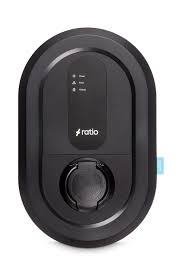
    Finally, we installed a Smart EV charger, unfortunately SolarEdge are yet to launch their EV charges in the UK, which would be the ideal EV charger to work with the Solar Edge. However, in this case we installed a Smart Ratio EV charger with additional CT to monitor the load and reduce the risk of the EV charger draining the Solar PV batteries. The Ratio EV charger is a very smart charger, in addition to the Dynamic Load Balancing functionality, it can charge your EV using 100% free energy generated from the home Solar PV system.

    For more Smart EV Charger details Click here

    Impressive SolarEdge Solar PV System and EV charger!

    Empowering Your Home with Solar Energy Solutions: A Comprehensive Guide

    Empowering Your Home with Solar Energy Solutions: A Comprehensive Guide 560 747 Elektra Smart Energy
    Table of Contents


      Introduction to Renewable Energy Solutions for Homes

      Reducing Your Carbon Footprint With Renewable Energy

      Renewable energy in homes, such as solar panels, significantly reduces carbon footprint by replacing fossil fuel-based electricity sources. Unlike fossil fuels, which emit greenhouse gases when burned, renewables produce clean energy without harmful emissions. Solar energy harnesses power from the sun using photovoltaic cells, while wind energy captures kinetic energy from moving air. These technologies generate electricity without burning fossil fuels, thus eliminating direct carbon dioxide emissions.

      By utilising renewable sources, homeowners decrease reliance on fossil-fuelled grid electricity, cutting down overall carbon emissions associated with power consumption. The carbon savings are twofold: firstly, renewable energy systems produce minimal to no emissions during operation, and secondly, they decrease demand for fossil fuels, indirectly curbing emissions from extraction, transportation, and combustion.

      This transition to renewable energy in homes not only mitigates climate change by reducing greenhouse gas emissions but also serves as a sustainable example for communities, accelerating the global shift towards a cleaner, greener energy future.

      Contributing to Local and Global Environmental Goals

      Using renewable energy in homes contributes to both local and global goals in several impactful ways. Locally, it enhances community sustainability and resilience. By generating clean energy on-site, homes become less reliant on distant, centralized power sources, bolstering energy security and reducing strain on local grids during peak demand. This decentralization fosters a more stable and efficient local energy supply.

      Economically, renewable energy installations create local jobs in manufacturing, installation, and maintenance, stimulating the local economy. Additionally, reduced energy costs free up household funds for spending elsewhere, further boosting the community.

      On a global scale, widespread adoption of residential renewables combats climate change. By decreasing reliance on fossil fuels, homes contribute to global emissions reduction targets, helping mitigate the adverse effects of global warming. This aligns with international climate agreements like the Paris Agreement.

      Moreover, homeowners’ adoption of renewables serves as a visible example, inspiring others to transition to cleaner energy sources. As the renewable energy market grows, economies of scale lead to technological advancements and cost reductions, making clean energy more accessible worldwide.

      In essence, integrating renewable energy into homes aligns with local aspirations for energy autonomy, economic growth, and sustainability, while simultaneously contributing to overarching global goals of carbon reduction, climate stability, and sustainable development.

      Solar Power Systems

      Understanding Residential Solar Panel Systems

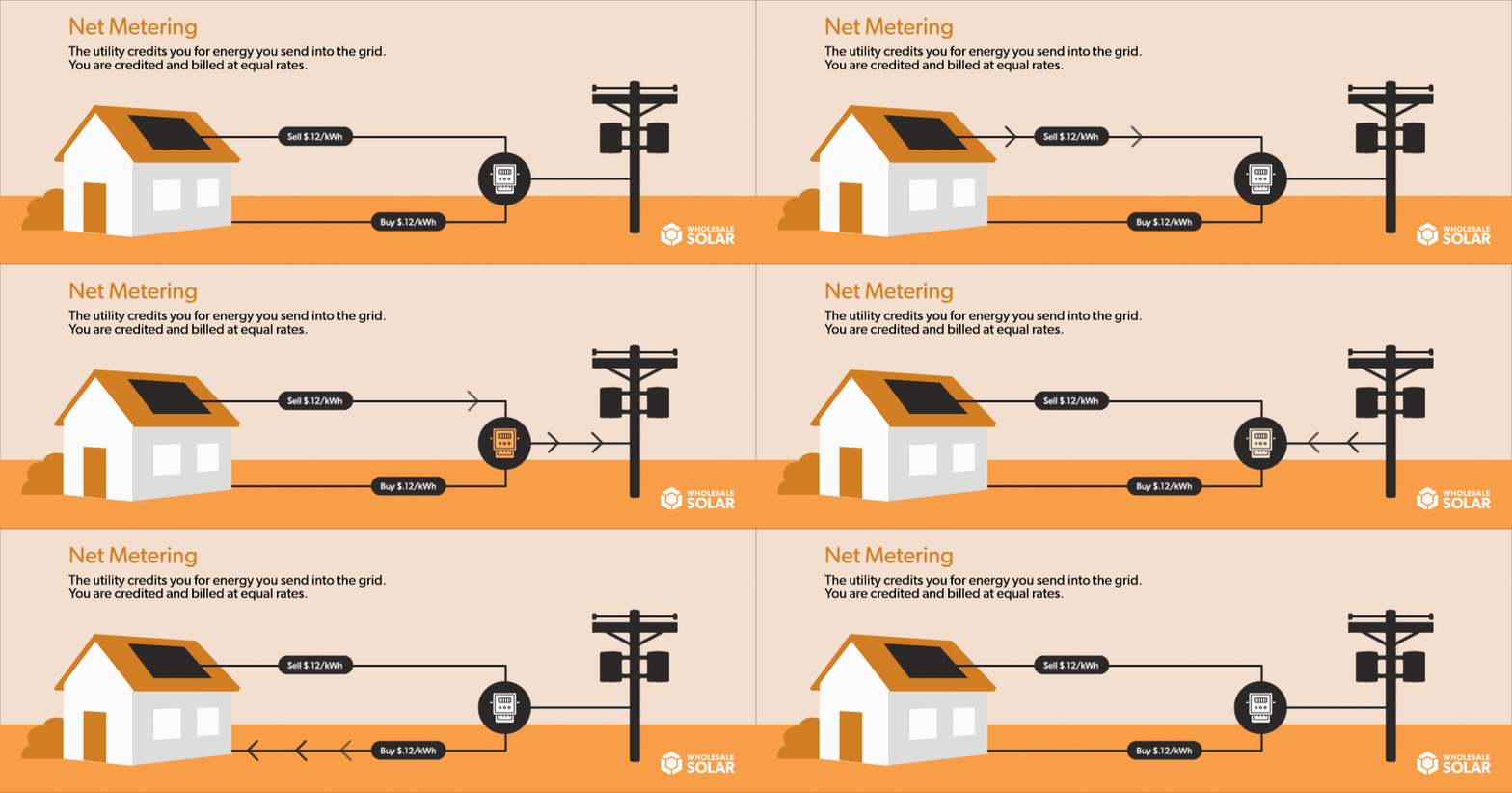
      Understanding residential solar panel systems involves grasping the fundamental components and principles. Solar panels, typically installed on rooftops, capture sunlight and transform it into electricity using photovoltaic cells. An inverter converts this generated direct current (DC) into alternating current (AC), enabling you to power your home and appliances. Net metering allows excess energy produced during sunny periods to be fed back into the grid, potentially earning you credits or payments.

      Careful consideration of system size, orientation, and tilt is essential to match energy needs and maximise efficiency. Shading should be minimised, as it can significantly reduce energy output. Professional installation, routine cleaning, and occasional maintenance ensure optimal performance. While installation costs vary, residential solar panels can lead to long-term savings on energy bills, enhance property value, and contribute to environmental sustainability. Exploring available incentives, tax credits, and financing options can help make your solar investment financially viable. Overall, understanding these key aspects empowers homeowners to make informed decisions about adopting residential solar energy.


      Types of Solar Panels: Monocrystalline, Polycrystalline, Thin-Film

      Solar panels come in various types, each with distinct characteristics and efficiency levels. Monocrystalline, polycrystalline, and thin-film are the primary categories.

      Monocrystalline Solar Panels: These panels are known for their efficiency and sleek appearance. They are made from a single crystal structure, allowing electrons to flow more freely, thus converting sunlight into electricity efficiently. Monocrystalline panels are space-efficient, making them a popular choice for residential rooftops with limited space. While they tend to be more expensive, their higher efficiency can lead to better long-term returns on investment.

      Polycrystalline Solar Panels: Made from multiple silicon crystals, polycrystalline panels are cost-effective and have a recognizable blue tint. They are slightly less efficient than monocrystalline panels but are a good option for larger installations where space is not a constraint. Polycrystalline panels are also durable and offer reliable performance over time.

      Thin-Film Solar Panels: These panels use a different manufacturing process, depositing thin layers of photovoltaic material onto a substrate like glass or metal. Thin-film panels are flexible and lightweight, allowing for unique installation options. However, they typically have lower efficiency compared to crystalline panels, requiring more space. Thin-film panels are suitable for larger installations and applications where aesthetics and flexibility are prioritized over maximum efficiency.

      Choosing the right type of solar panel depends on factors like budget, available space, efficiency goals, and aesthetic preferences. Monocrystalline panels are ideal for high efficiency in limited space, polycrystalline panels offer cost-effectiveness, and thin-film panels are versatile and can be tailored to specific needs. Here at EleKtra we install monocrystalline panels, which utilise the most modern technology available to maximise efficiency.

      Assessing Your Home’s Solar Potential

      Assessing your home’s solar potential is a crucial step before embarking on a solar panel installation. Several factors influence the feasibility and efficiency of a solar energy system.

      Sunlight Availability: Evaluate the amount of direct sunlight your property receives throughout the day. Unobstructed south-facing rooftops typically yield the highest energy production, but east and west orientations can also be effective.

      Roof Angle and Area: The pitch and size of your roof affect solar panel placement and efficiency. An optimal tilt angle allows panels to capture sunlight more effectively, maximizing energy generation.

      Shading: Identify potential sources of shading, such as trees, buildings, or chimneys, that could obstruct sunlight and decrease panel efficiency. Minimizing shading is crucial for optimal energy production.

      Location: Your geographical location affects solar potential. Areas with more sunlight tend to generate more energy. Online tools and solar maps can help estimate the average solar radiation in your region.

      Energy Consumption: Analyse your household’s energy needs to determine the appropriate system size. Consider factors like historical energy bills, energy-efficient appliances, and potential future energy demands.

      Regulations and Permits: Research local regulations, building codes, and permit requirements for solar installations in your area. Some regions offer incentives or rebates for solar adoption.

      Budget and Financing: Assess your budget and explore financing options, including loans, leases, and incentives, to determine the financial feasibility of the project.

      By thoroughly evaluating these factors, you can determine your home’s solar potential and make informed decisions about the type, size, and placement of your solar panel system. Read our detailed blog on assessing your homes solar potential for further information. Consulting with solar professionals and utilising online solar assessment tools can provide valuable insights to ensure a successful and efficient solar energy integration for your home.

      Steps to Install Solar Panels on Your Roof

      Installing solar panels in your home involves several key steps.

      Assessment: Evaluate your home’s solar potential by considering factors like sunlight exposure, roof angle, shading, and energy consumption.

      Design: Work with a solar provider to design a system that fits your energy needs and roof space. Determine the number of panels, their placement, and the inverter location.

      Permits and Approvals: Obtain necessary permits and approvals from local authorities, following regulations and building codes.

      Installation: Professional installers mount the panels on your roof, connect them to the inverter, and wire the system to your electrical panel.

      Inspection: Local inspectors review the installation to ensure compliance with safety and code requirements.

      Interconnection: Your solar system is connected to the grid, allowing for net metering and the possibility of selling excess energy back to your utility.

      Monitoring: Set up a monitoring system to track your solar system’s performance and energy production.

      Enjoying Solar Energy: Once installed, your solar panels start generating clean, renewable energy, reducing your reliance on traditional power sources and potentially lowering your energy bills.

      Solar Inverters and Net Metering

      A solar inverter is a device that converts the direct current (DC) electricity generated by solar panels into alternating current (AC), which is the type of electricity used in homes and businesses. It ensures that the solar energy produced can be used to power appliances, lighting, and other electrical devices in your home.

      Net metering is a billing arrangement that allows solar panel owners to receive credit for excess electricity they generate and feed back into the grid. When your solar system produces more energy than your home consumes, the surplus electricity is sent to the grid, and your meter runs backward, effectively earning you credits. During times when your solar system isn’t producing enough energy, such as at night, you draw power from the grid. At the end of the billing cycle, the credits you’ve earned offset the electricity you’ve consumed, potentially resulting in lower overall energy costs.


      Monitoring and Maintaining Your Solar System

      Monitoring and maintaining your solar system are essential to ensure its long-term effectiveness and efficiency. Regular monitoring allows you to track energy production and quickly identify any issues that might arise. Many modern solar systems come with online monitoring tools or smartphone apps that provide real-time data on your system’s performance, enabling you to detect and address any drops in energy production promptly.

      To maintain optimal performance, it’s important to keep your solar panels clean and free from debris. Regularly cleaning them, especially in dusty or pollen-heavy environments, ensures that sunlight can be efficiently captured and converted into electricity.

      Inspect your solar system for shading problems as well. Trees, buildings, or other structures may cast shadows on your panels, reducing their output. Trimming trees or adjusting panel placement can mitigate this issue.

      While solar systems are generally low maintenance, it’s recommended to schedule periodic professional maintenance to check connections, inverters, and electrical components. This proactive approach helps identify and address potential problems before they escalate, ensuring your system’s reliability and longevity.

      Additionally, being mindful of extreme weather conditions, such as heavy snow or hail, and performing occasional visual checks can help safeguard your system. By actively monitoring and maintaining your solar panels, you can maximise their efficiency, extend their lifespan, and continue to enjoy the benefits of clean, renewable energy while minimising the need for costly repairs.

      Energy Storage Solutions

      The Role of Batteries in Storing Renewable Energy

      Solar batteries play a crucial role in storing renewable energy for residential use. They allow homeowners to capture surplus energy generated by their solar panels during peak sunlight hours and store it for later use, typically during the evening or when solar production is low.

      These batteries work by converting excess energy into chemical energy, which is stored within the battery cells. When energy demand exceeds solar production, the stored energy is then converted back into usable electricity for powering the home. This helps households become more self-sufficient, reducing reliance on the grid during non-sunny periods and enabling greater energy independence.

      Solar batteries also offer resilience in case of power outages, providing backup power to critical appliances or the entire home. By storing and efficiently utilising solar energy, these batteries contribute to lowering electricity bills, reducing the carbon footprint, and promoting a more sustainable and reliable energy future for homeowners.

      Read our blog to discover further; is solar battery storage worth it for you?

      Types of Residential Energy Storage Systems

      There are two primary types of solar battery systems for homes: lead-acid batteries and lithium-ion batteries.

      Lead-Acid Batteries: These are the older, traditional type of battery technology. They come in two variations: flooded lead-acid and sealed lead-acid (AGM or gel). While they are cost-effective, lead-acid batteries tend to have shorter lifespans, lower energy density, and require more maintenance. They are suitable for less frequent use or off-grid systems.

      Lithium-Ion Batteries: This is the newer and more popular option due to their higher energy density, longer lifespan, and lower maintenance requirements. Lithium-ion batteries are lighter, more compact, and offer a deeper depth of discharge without affecting their performance. They are well-suited for daily cycling and are often used for both on-grid and off-grid systems.

      Choosing the right battery system depends on factors like budget, intended use (daily cycling or backup power), available space, and desired lifespan. Since lithium-ion batteries are increasingly favored for their superior performance and longevity, we install these batteries here at EleKtra.

      Maximising Self-Consumption and Backup Power

      Maximizing self-consumption and backup power are essential strategies for optimizing solar energy use at home. Self-consumption involves utilizing the energy your solar panels generate directly within your household, reducing reliance on grid electricity. To achieve this, align energy-intensive tasks like running appliances, charging electric vehicles, or heating water with peak solar production times.

      Integrating a solar battery system enhances self-consumption by storing excess energy for later use, especially during non-sunny hours. During periods of low solar generation or power outages, the stored energy in batteries provides reliable backup power, ensuring uninterrupted electricity supply for critical appliances or the entire home.

      Smart energy management systems, such as load controllers and time-of-use settings, can further optimise self-consumption and backup power utilisation. By strategically timing energy-intensive activities and efficiently storing solar energy, homeowners can minimise reliance on the grid, maximise their renewable energy utilisation, reduce costs, and enhance overall energy resiliency.

      Maintenance and Efficiency Tips for Battery Systems

      To ensure optimal performance and longevity of solar batteries, regular maintenance is key. Keep the battery area clean and free from dust or debris to prevent overheating. Check for proper ventilation to maintain safe operating temperatures. Regularly inspect and tighten connections to prevent corrosion. Avoid deep discharges, as shallow cycles prolong battery life. Implement a regular testing schedule to monitor capacity and performance. Update battery management system firmware if applicable. Finally, adhere to manufacturer guidelines for charging and discharging to prevent overcharging or over-discharging. Proactive maintenance practices contribute to prolonged battery efficiency and reliable backup power for your solar energy system.

      Smart Home Integration and Energy Management

      Controlling and Optimising Renewable Energy Use

      In today’s dynamic energy landscape, controlling and optimizing renewable energy use is a critical endeavour. As more households adopt solar panels, the focus shifts towards effectively harnessing and managing these resources. The goal is to strike a harmonious balance between power generation and consumption, maximizing the benefits of renewable energy while minimizing waste.

      One essential aspect of this endeavour is aligning energy-intensive activities with periods of peak renewable energy production. For instance, running appliances like washing machines and dishwashers during daylight hours when solar panels are generating electricity can lead to significant savings. Similarly, charging electric vehicles during sunny afternoons ensures that the vehicle’s battery harnesses clean energy, reducing reliance on conventional power sources.

      Another strategy involves optimising energy storage. By incorporating solar battery systems, homeowners can store excess energy generated during sunny hours and use it during the evening or cloudy days. This approach increases self-consumption and allows for greater energy independence, especially in regions where net metering regulations are less favourable.

      Smart Meters, Home Energy Monitors, and Apps

      The transition to renewable energy is augmented by technology that provides real-time insights into energy consumption and generation. Smart meters, for instance, offer a digital window into a household’s electricity use. These devices record energy consumption patterns and communicate data back to utility companies, ensuring accurate billing and promoting energy efficiency.

      Home energy monitors take this concept a step further by providing detailed information about how individual appliances contribute to overall energy consumption. This granularity enables homeowners to pinpoint energy-intensive devices and make informed decisions about their usage. By identifying culprits like energy-hungry air conditioners or inefficient lighting, households can adjust habits and invest in more energy-efficient alternatives.

      Mobile apps provide a user-friendly interface for accessing energy data and controlling various systems remotely. These apps enable homeowners to monitor energy consumption on-the-go, adjust smart thermostats, turn off lights, and even manage solar battery charging. This level of control empowers users to make real-time adjustments based on energy availability, weather forecasts, or specific preferences.

      Demand Response and Load Shifting Strategies

      In addition to technology-driven solutions, demand response and load shifting strategies play vital roles in optimising renewable energy use. Demand response programs allow homeowners to voluntarily reduce their electricity consumption during peak demand periods. In exchange, participants often receive financial incentives or lower electricity rates. This not only eases strain on the grid but also contributes to a more efficient and sustainable energy system.

      Load shifting involves strategically scheduling energy-intensive activities to off-peak hours. For instance, programming a dishwasher to run late at night or charging an electric vehicle during the early morning hours takes advantage of lower electricity demand. This approach reduces the need to draw energy from the grid during peak times, when the energy mix may include more non-renewable sources.

      Enhancing Home Automation for Energy Efficiency

      As technology evolves, home automation emerges as a cornerstone of energy efficiency. Smart thermostats adjust temperatures based on occupancy patterns and outdoor conditions, reducing unnecessary heating or cooling. Lighting systems can be programmed to turn off automatically when rooms are vacant, preventing energy waste. Smart plugs allow for remote control of devices, ensuring they are powered off when not needed.

      Moreover, integrating home automation with renewable energy sources creates a dynamic synergy. Smart systems can prioritize using solar or wind-generated energy before tapping into grid power. This seamless coordination enhances self-consumption and reduces the carbon footprint further.

      In conclusion, controlling and optimising renewable energy involves a multifaceted approach that integrates technological advancements, data-driven insights, behavioural adjustments, and strategic planning. By embracing smart meters, home energy monitors, and apps, adopting demand response and load shifting strategies, and enhancing home automation, homeowners can navigate the evolving energy landscape with efficiency and sustainability at the forefront.

      Financial Incentives and Financing Options

      Government Incentives, Tax Credits, and Rebates for Solar Energy Systems

      The United Kingdom’s commitment to renewable energy is reflected in a range of incentives and initiatives aimed at promoting solar energy adoption. The Feed-in Tariff (FiT) was a key program that provided payments to homeowners who generated their own renewable energy. Although the FiT scheme has closed to new applicants, existing participants continue to receive payments for their generated energy.

      In its place, the Smart Export Guarantee (SEG) now rewards homeowners for exporting surplus energy to the grid. This payback mechanism ensures that excess energy produced by solar systems benefits both homeowners and the overall energy network. Moreover, homeowners in the UK can benefit from reduced Value Added Tax (VAT) on the installation of energy-saving materials, including solar panels. This reduced rate further incentivises the transition to renewable energy.

      Read our blog to understand more about the renewable energy grants available to you.

      Exploring Financing Paths for Renewable Upgrades

      For UK residents considering renewable upgrades, various financing paths are available. The Green Homes Grant provides financial support for energy-efficient home improvements, including solar installations. This grant covers up to two-thirds of the costs, making it an attractive option for those seeking to enhance their energy efficiency.

      Additionally, homeowners can explore competitive solar loans offered by financial institutions, enabling them to spread the cost of installation over time while reaping immediate energy savings. These loans often come with favourable terms and interest rates, making renewable upgrades financially feasible.

      Read our blog to find out which renewable energy system has the most return on investment for your home in the UK.

      Calculating Return on Investment (ROI) for Solar Systems

      Calculating the Return on Investment (ROI) is a prudent step for UK homeowners considering solar systems. Consider factors such as the cost of installation, potential savings on energy bills, income from the SEG scheme, and VAT reductions. The favorable UK climate for solar energy enhances the energy production potential, contributing to a quicker payback period.

      A shorter ROI translates to accelerated financial benefits, and the combination of reduced energy bills, potential SEG income, and VAT savings can lead to an attractive ROI. This analysis aids homeowners in understanding the long-term economic advantages of investing in solar energy and informs decisions regarding system size and financing options.

      Read our blog to understand further; is solar PV is a good investment?

      Overcoming Challenges and Considerations

      Addressing Aesthetics and Neighbourhood Regulations

      While the benefits of solar energy are clear, addressing aesthetics and neighbourhood regulations is essential for smooth integration. Concerns about the visual impact of solar panels on property aesthetics and neighbourhood harmony can arise. To mitigate this, modern solar panels come in sleek designs, blending seamlessly with rooftops. Community engagement and transparency can help address neighbours’ concerns and garner support.

      Local regulations may dictate the placement, angle, or colour of solar panels. Homeowners should research and adhere to these guidelines to ensure compliance. Some homeowner associations might have restrictions, requiring collaboration and communication to find solutions that satisfy both sustainability goals and aesthetic considerations.

      Dealing with Intermittency and Seasonal Variations

      Intermittency and seasonal variations pose challenges for solar energy systems. Cloudy days and night-time result in reduced energy production. However, smart energy management strategies can counteract these limitations. Battery storage systems allow excess energy to be stored and used during low production periods. Grid-tied systems can export excess energy to the grid, earning credits for future use.

      Seasonal variations require system adjustments. Tilt angles can be optimized for different seasons to capture maximum sunlight. Hybrid systems, combining solar with other renewable sources like wind or hydroelectricity, can provide a consistent energy supply throughout the year.

      Backup Power Solutions for Uninterrupted Energy Supply

      To ensure uninterrupted energy supply during power outages, backup power solutions are crucial. Solar battery storage systems, such as lithium-ion batteries, store surplus energy generated during sunny periods and provide power when the sun isn’t shining. These systems can support critical appliances or even the entire home, offering peace of mind during emergencies.

      Additionally, standby generators that run on natural gas or propane can act as a reliable backup during extended outages. These generators automatically switch on when the grid goes down, providing continuous power to the home. Incorporating backup power solutions enhances energy resilience, benefiting homeowners and their communities. They offer not only peace of mind but also contribute to reduced grid pressure during peak demand periods, promoting energy stability for all.

      Getting Started: Steps to Transition Your Home to Renewable Energy

      Harnessing solar energy for your home involves a series of well-defined steps to ensure a smooth and successful transition to renewable power.

      Conducting a Home Energy Audit

      Begin by evaluating your current energy consumption. A home energy audit identifies areas where you can improve efficiency before installing solar panels. By reducing energy waste through insulation, sealing gaps, and upgrading appliances, you optimize the performance of your solar system.

      Choosing the Right Renewable Energy Solution

      Determine the best renewable energy solution for your home. Solar panels are a popular choice, but wind turbines and solar water heaters may also be suitable depending on your location and energy needs. Consider factors like available space, local climate, and the percentage of your energy consumption you want to offset with renewables.

      Finding Qualified Contractors and Installers

      Research and select reputable solar contractors and installers. Seek recommendations, read reviews, and verify credentials. Experienced professionals ensure proper installation, system efficiency, and compliance with local regulations. Request quotes, compare offerings, and inquire about warranties and post-installation support.

      Permitting, Installation, and Inspection Process

      Acquiring necessary permits is crucial before installation. Your chosen contractor will typically handle this paperwork. Installation involves placing solar panels on your roof or property and connecting them to your electrical system. A well-executed installation ensures optimal performance and safety.

      Post-installation, your local authorities will conduct inspections to verify compliance with building codes and safety standards. Passing inspections is essential before your solar system can be connected to the grid.

      Throughout the process, open communication with your chosen contractor is vital. Regular updates on project milestones and any potential challenges foster a transparent and collaborative experience.

      Case Studies and Real-Life Examples

      Have a read of our customer testimonials for stories of homeowners successfully adopting renewable energy, including lessons learned, tips, and insights.

      Sophie Ben-Tovim

      16/08/2023

      Why are Energy Prices so High?

      Why are Energy Prices so High? 560 747 Elektra Smart Energy
      The energy price cap is determined by the energy industry regulator, Ofgem and the cap sets a maximum price that energy suppliers can charge customers for each kilowatt hour (kWh) of energy that they use.  

      After a 54% increase to the energy price cap in April 2022, the Energy Price Guarantee (EPG) was enforced .

      This was a great reduction from the energy price cap level of £3,280 set by Ofgem.  

      What caused the Energy Crisis? 

      Our energy bills have been increasing due to supply and demand issues pushing up wholesale energy prices. This is the amount that your provider pays to the energy generators for gas and electricity. It is the rise in these wholesale costs that are the main driver in the energy price spikes. So, what has caused the wholesale prices to rise?  

      Peruvian imports have also more than doubled.

      Sellindge. This is the European link combining the technical expertise of both the British National Grid and the French RTE. The site is still not running at full capacity, and is aiming to reach this goal by October 2023.  

      Why are Energy Bills still so high? 

      Our bills are dependent on the wholesale prices of energy, which are now decreasing. Network cost, which makes up 25.35% of our energy bills, pays for fitting and running gas pipes and electricity cables. It also covers the cost of energy firms that have failed. Our energy bills are therefore entirely dependent on the price of imports. As a result, most companies “hedge”.

      Will Energy Bills stay down? 

      Market analysts do predict that energy prices will continue to decrease from 2023 into 2024. This may spark competition within the industry, pushing prices down further. 

      Sophie Ben-Tovim

      8/08/2023