
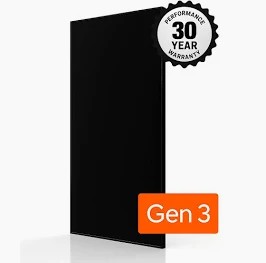
At Elektra Smart Energy, we’re always evaluating breakthroughs that make solar systems more efficient, reliable, and visually appealing. When it comes to solar energy, not all panels are created equal. The latest Aiko 470W Generation 3 (Gen 3) panels stand out for their efficiency, aesthetics, and intelligent energy management. But how do they compare to traditional panels most people are familiar with?
| Feature | Aiko 470 W Gen 3 (ABC) | Traditional Panel |
| Aesthetics | Sleek, all‑black, borderless | Silver busbars visible; grid-like look |
| Cell Architecture | ABC (all-back-contact) | Front Contact (Visible wires) |
| Peak Efficiency | Around 23.5–24.3% | Typically ~19–21% |
| Shade Handling | Minimal power loss under partial shading | One shaded cell can block entire substring |
| Thermal Performance | Enhanced heat dissipation, cooler under load | Less efficient cooling; more prone to hot-spots |
| Visual Appeal | True-black finish with no front wires | Front busbars visible; less elegant |
🌤️ Shading Matters
Traditional panels often lose most of their power if even one part is shaded—like a chimney shadow or tree branch. Aiko’s Gen 3 panels use a more intelligent layout that keeps energy flowing, even when some cells are shaded.
As Aiko explains, shading only deactivates the cells that need it—so if one cell is shaded, the panel maintains most of its output.
Technical Dive – Inside the Aiko Gen 3 Advantage
🧩 Same Diodes, Different Brains
Both Aiko Gen 3 and traditional panels use three bypass diodes. However, how they’re integrated makes all the difference:
Traditional Panels:
- Cells are grouped in 3 sections (usually 20–24 cells each).
- One diode per section.
- If any part of one section is shaded, the whole section stops producing.
Aiko Gen 3 Panels:
- Also 3 diodes, but the internal cell layout is fundamentally different.
- Dynamic Connections between cell groups ensure smarter routing.
- Instead of rigid blocks, the Gen 3 panels allow power to flow around shaded areas, dynamically maximizing output.
🔄 Dynamic Cell Connection – What Does It Mean?
Traditional panels wire cells in fixed series groups. If one group fails or is shaded, the output is severely affected.
Aiko Gen 3 panels use dynamic interconnects, allowing energy to bypass individual underperforming cells—not just whole blocks. This reduces the impact of partial shading and maintains more stable power output throughout the day.
💡 ABC Architecture – Why It Matters
- No front contacts — no metal masking sunlight.
- Precision Overlap Soldering—cells are tightly packed to maximize active area
- Higher Module Efficiency — reaching up to 24.3%
- Lower electrical resistance — smoother current flow, generating more power.
- Better thermal control — ABC design enhances heat dissipation vs. front-contact designs.
🚦 How It All Works Together
- Three diodes are still present—one for each major cell section.
- When a cell (or group) drops ≥ 4 cells worth, its bypass diode activates.
- Because of ABC and dynamic wiring, only that small segment is bypassed—not an entire block.
- The result? Gradual performance change rather than abrupt drops—even under uneven light.
✅ Elektra Smart Energy Verdict
Aiko’s 470 W Gen 3 panels clearly deliver:
- Superior aesthetics – perfect for home or commercial rooftops.
- High efficiency – 23.5–24+% range means more power per roof square metre.
- Shade resilience – unique ABC dynamic wiring avoids abrupt power loss.
- Long-term reliability – lower heat stress and better material durability.
🔚Conclusion: Is Aiko Gen 3 Worth It?
If you’re installing a new solar system and want cutting-edge performance, elegant design, and maximum efficiency—even in less-than-ideal conditions—Aiko’s 470W Gen 3 panels are hard to beat. While traditional panels still do the job, the Gen 3 system is simply smarter, more adaptable, and future-ready.
Elektra Smart Energy
23/06/2025


